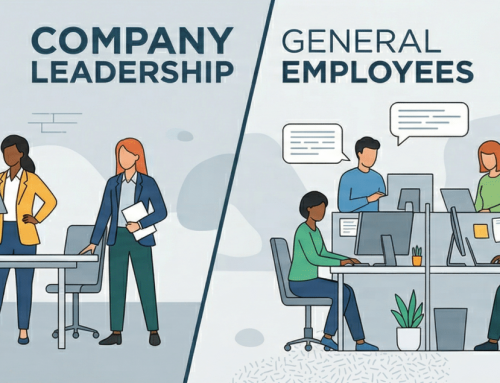

One Code of Conduct, Two Training Programs: Why Field Employees Need Different Scenarios Than Office Employees
Every organization with a Code of Conduct wants the same thing: employees who recognize compliance risks and know what to do when they encounter one. The Code of Conduct applies to everyone. The training that makes it effective isn’t.
For organizations with both office and field workforces — manufacturers, energy companies, construction firms, logistics operations, mining companies — a single compliance training program built around an office environment consistently underperforms with field employees. Not because field employees are less committed to compliance. Because the scenario doesn’t look like their job.
And for many of those field workforces, there’s a third dimension to this problem that most organizations address last, if at all: the employees whose primary language isn’t English.
The Recognition Gap Is an Environment Problem
Compliance training is built around recognition. An employee who knows the harassment policy will still fail to act if they don’t recognize the situation in front of them as harassment. Scenario-based training closes that gap by placing employees in realistic situations and asking them to make decisions before they encounter the real thing.
The problem is that ‘realistic’ means something different depending on where you work.
A harassment scenario set in a conference room — a manager making inappropriate comments to a colleague before a meeting, an employee receiving unwanted messages on a work laptop — is entirely recognizable to an office employee. It maps directly onto their environment, their relationships, and the situations they navigate every day.
The same scenario shown to a heavy equipment operator at an oil drilling site, a line worker on a manufacturing floor, or a crew member at a mining operation doesn’t land the same way. The setting is wrong. The cast is wrong. The pressure points are wrong. The scenario reads like something that happens in offices, not something that could happen to them here today.
When employees can’t locate themselves in a scenario, the recognition training doesn’t stick.
Same Code of Conduct. Different Scenario Library.
The solution is not two different Codes of Conduct. The ethical standards — treat colleagues with respect, report concerns, don’t falsify records, avoid conflicts of interest — are identical for every employee regardless of role or work environment. The standard is universal. The scenario that teaches an employee to recognize when the standard applies is not.
Consider how the same compliance principle plays out differently by environment:
Harassment
Office scenario: A manager makes comments about a colleague’s appearance in a performance review meeting.
Field scenario: A supervisor on a drilling crew uses a slur to address a Hispanic crew member — then says it’s just a nickname. Other crew members are present and say nothing.
The principle is the same. The recognition challenge is different. The field employee who has practiced the second scenario is better prepared to recognize and respond to the situation they’re actually likely to encounter.
Reporting a Concern
Office scenario: An employee suspects their manager is padding expense reports and wonders whether to use the company hotline.
Field scenario: A crew member notices that a safety inspection record was signed off without the actual inspection being done. The foreman is well-liked. The job site is remote. There’s no obvious way to report it.
The reporting obligation is the same. The barriers to reporting — physical isolation, close-knit crew dynamics, fear of job loss in a specialized trade — are different, and training that doesn’t address those specific barriers doesn’t help the field employee navigate them.
Accurate Records
Office scenario: A sales manager asks an employee to backdate a receipt by two days so a deal counts toward the quarter.
Field scenario: A maintenance technician is told to log a piece of equipment as inspected before the inspection has actually been completed — because the schedule is behind and the foreman says, ‘We’ll get to it tomorrow.’
Same principle. The field version carries additional stakes — a falsified maintenance record isn’t just a compliance problem, it’s a safety problem. Field-specific training connects those dots in a way that generic office-based training does not.
Field Employees Are Statistically Less Likely to Report — Training Is Part of Why
Organizations consistently find that field reporting rates are lower than office reporting rates. Some of this reflects structural factors — field workers may have less access to reporting channels, may be more economically vulnerable, and may work in environments where speaking up is culturally discouraged.
But part of it reflects a training problem. Compliance training that feels like it was built for someone else — someone who works in an office, uses a laptop, attends meetings in conference rooms — doesn’t build the confidence in the compliance process that reporting requires. When the training doesn’t speak to your environment, it doesn’t speak to you.
Field-specific scenario training directly addresses the situations field employees face: the supervisor who dismisses concerns on a job site, the coworker who says reporting is disloyal to the crew, and the pressure to keep a project on schedule that makes cutting corners feel necessary. Training that reflects those specific pressures builds the recognition and confidence that translates into actual reporting behavior.
The Third Dimension: Language
For many U.S. field operations — in manufacturing, construction, energy, food processing, and logistics — Spanish is not a secondary language for a portion of the workforce. It is the primary language. These employees work in English every day. They can follow safety instructions in English. They can fill out forms in English.
But processing a nuanced ethical scenario — evaluating whether a supervisor’s request crosses the line, deciding whether to report a concern and to whom, recognizing whether a situation is harassment or just a tough work environment — requires the language you think in.
An employee who processes a compliance decision in their second language uses fewer cognitive resources than one who makes the same decision in their first language. The scenario is the same. The recognition challenge is meaningfully harder.
This Is Not a Political Question. It Is a Compliance Question.
Some organizations resist Spanish-language compliance training because it feels like an accommodation for employees who should be learning English. Setting aside whether that view is fair, it is operationally counterproductive.
If a harassment violation occurs because an employee didn’t fully understand the training or didn’t feel confident enough to report a concern they couldn’t articulate in English, the organization bears the liability. The EEOC has been clear that training provided only in English to employees whose primary language is Spanish can constitute a barrier to equal participation in workplace programs.
Compliance training that employees can’t fully process is not a compliance program. It is documentation.
Global Companies Face This in Their Own Operations
A German manufacturer with a plant in Alabama, a Dutch mining company with U.S. field operations, and a Mexican energy company expanding into the Gulf Coast — all of them have office environments where English works fine as the training language. And many of them have field operations where it doesn’t.
European organizations typically understand this instinctively because they operate in multilingual environments where training translation is standard practice. What sometimes gets missed is that the same logic applies in their U.S. operations — not because employees can’t speak English, but because compliance decisions made in a second language are harder to get right.
What a Field-Ready Compliance Program Actually Looks Like
The organizations that have addressed this problem consistently follow the same approach. One Code of Conduct that applies to everyone. Two scenario libraries built around different work environments. Translation into Spanish when required by the workforce.
In practice, this means:
- Annual Code of Conduct course: The same policy content delivered in both an office version and a field version, with scenarios adapted for each environment. Cast changes. Settings change. The compliance principles don’t.
- Role-specific reinforcement scenarios: Short scenario reminders deployed throughout the year that reflect the situations each population actually encounters. A field safety record scenario for field employees. An expense reporting scenario for office employees. Both are reinforcing the same underlying Code of Conduct.
- Spanish-language versions: For organizations with significant Spanish-speaking field workforces, the field training program is built translation-ready from the start — not adapted after the fact, which is significantly more expensive.
The cost of building two scenario libraries is not twice the cost of building one. The scenarios are adapted from the same source material. The policy content is identical. The production work is in the cast, the settings, and the situations — not in rewriting the compliance framework.
The Standard Worth Holding Field Compliance Training To
A field employee who completes annual Code of Conduct training should be able to recognize a compliance situation when they encounter one in their actual work environment — not just in the environment the training assumed they worked in.
If the training features characters in conference rooms and the employee works on a drilling platform, that standard has not been met.
If the training is available only in English and the employee makes compliance decisions in Spanish, that standard has not been met.
The same Code of Conduct. The same ethical standards. Training that actually reaches the people it’s supposed to protect.
See How Xcelus Builds Field-Ready Compliance Programs →
Xcelus builds Code of Conduct training programs for organizations with both office and field workforces — including scenario libraries tailored for heavy-industry environments and Spanish-language versions for U.S. field operations. Programs are delivered as annual courses, modular scenario training, or short reinforcement scenarios deployed throughout the year.
Explore our Code of Conduct Training approach, browse scenario examples, or contact us to discuss your program.