
The AI Decision Employees Make Every Day — And Why Responsible AI Training Is Becoming Essential
To save time, she opens a public AI tool and uploads a draft of the company’s internal market analysis report. She asks the AI to summarize the document and generate a polished executive overview.
Within seconds, the AI produces a clean summary that looks perfect for the presentation.
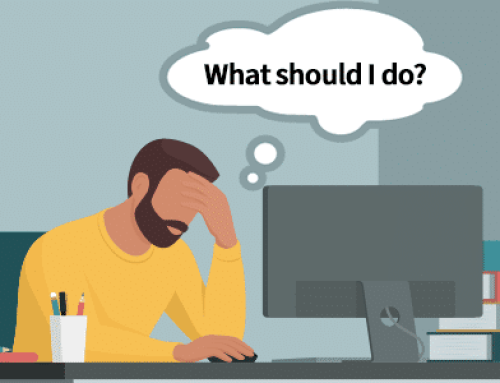
But Sarah pauses.
The report she uploaded contains confidential client data and proprietary market insights.
She wonders: “Did I just send confidential company information outside the organization?”
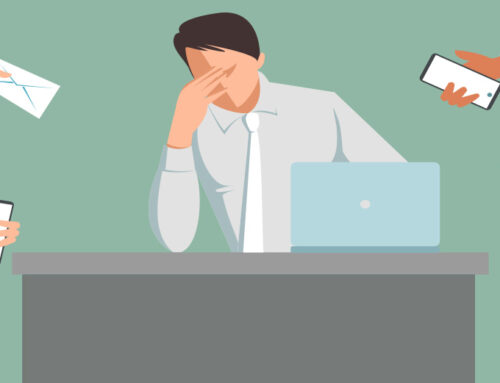
For compliance leaders, that pause is everything. It’s not malicious behavior. It’s not intentional misconduct. It’s an employee trying to work faster using powerful new tools — in a moment where the wrong choice feels like the productive one.
That moment is where responsible AI training becomes critical.
Below are five decision situations employees are already encountering as AI tools become part of everyday work.
Scenario 1: Uploading Confidential Information to a Public AI Tool
Marcus is finishing a client proposal due in two hours. He pastes the company’s internal pricing analysis into ChatGPT to generate a quick executive summary. It takes ten seconds. The output looks clean.
It also just sent your pricing strategy to a system you do not control — one that may retain that input, process it, or incorporate it into model training.
Marcus didn’t intend to disclose anything. He was trying to meet a deadline. But depending on the AI platform’s terms of service, that information may have left the organization the moment he hit enter.
This is one of the top concerns for compliance officers today. Employees need to recognize when confidential information should never enter a public AI system — before the deadline pressure makes the shortcut feel reasonable.
Scenario 2: AI Generates Content That Looks Correct — But Isn’t
A project manager is researching regulatory requirements for a new product launch. She asks an AI tool to summarize the relevant standards. The AI generates a detailed, authoritative-sounding response with specific regulation names and citation numbers.
She includes the summary in a compliance report submitted to leadership.
One of the cited regulations does not exist.
AI systems generate plausible-sounding output — including fabricated citations, invented legal cases, and non-existent regulatory standards — with the same confidence and fluency as accurate information. There is no warning label. The output that hallucinated a regulation looks identical to the output that cited a real one.
Employees must understand that AI output must always be independently verified, especially in regulated environments where an inaccurate citation can create real liability.
Scenario 3: AI-Generated Marketing Content and Intellectual Property
A marketing employee uses an AI image generator to create visuals for a new product campaign. The AI produces a compelling image in seconds. It looks original. It looks professional.
She pauses before publishing: “Where did this image actually come from?”AI-generated content is created from patterns learned across vast datasets that may include copyrighted material.
The legal status of AI-generated images — and the organization’s liability for publishing them — is actively evolving across jurisdictions. Publishing AI-generated content without review can expose the organization to intellectual property claims it cannot easily defend.
Responsible AI training helps employees understand when AI-generated content requires an additional review before it is shared externally.
Scenario 4: Pasting Proprietary Code into an AI Coding Tool
A software developer is troubleshooting a complex problem in a proprietary system. To get help faster, she pastes a section of the company’s source code into a public AI coding assistant.
The AI solves the problem immediately. The fix works.
What the developer didn’t consider: the proprietary code she pasted may now be outside the organization’s control. Public AI coding tools can retain input. Code patterns, architecture decisions, and security logic that took years to build may have just become training material for a model accessible to anyone.
Many technology companies now have specific policies governing the use of AI coding tools. Employees need to understand those boundaries before the tool is opened and the code has already been pasted.
Scenario 5: Accepting AI Recommendations Without Applying Judgment
A team member is preparing a recommendation for a significant business decision. She uses an AI tool to analyze the options and suggest a course of action.
The AI produces a clear, well-structured recommendation with supporting arguments.
Because the answer looks polished and thorough, she presents it to leadership without additional analysis.
But the AI had no access to the organization’s current strategy, the regulatory environment in the relevant market, or the relationship history with the key stakeholder involved. The recommendation was coherent. It was also wrong in this situation in ways the AI had no way of knowing.
AI systems do not understand organizational context, regulatory nuance, or strategic implications. Human judgment and oversight are not optional add-ons to AI-assisted work — they are the accountability standard that every major AI regulatory framework now requires.
Why Compliance Leaders Are Paying Attention
The concern is not that employees will intentionally misuse AI tools. The concern is that employees will use powerful tools without understanding the risks — in ordinary moments, under normal time pressure — making choices that feel productive but turn out to be exposures.
AI use is already affecting confidential data protection, intellectual property, regulatory compliance, decision accuracy, and reputational risk — across every department, every role, and every level of the organization.
And in most organizations, employees are already using these tools before governance programs have fully caught up.
Training bridges that gap. It gives employees the recognition skills they need to pause in the right moment — before a small mistake becomes a larger incident.
Responsible AI Use Is Becoming a Core Compliance Competency
Just as organizations train employees on cybersecurity awareness, data privacy, and conflicts of interest, responsible AI use is quickly becoming an essential workplace compliance skill.
Employees need clear guidance on four questions:
- When is it safe to use AI tools?
- What information should never enter a public AI system?
- How should AI-generated outputs be verified before use?
- When does human oversight apply?
Organizations that provide this training help employees use AI productively while protecting company data, intellectual property, and compliance obligations across every jurisdiction where they operate.
Preparing Your Organization for Responsible AI Use
Sarah’s moment of hesitation — that pause before she hit send — is exactly what responsible AI training is designed to instill. The question isn’t whether your employees will face these situations. They already are.
The question is whether they’ll pause in time.
Xcelus built the Responsible AI at Work series to address each of these situations through scenario-based training that puts employees in the decision-making process before they face it in real work. Four modules. Stackable. SCORM-compatible. Customizable to your organization’s AI tools and governance policy.