
Why Code of Conduct Training Fails to Change Behavior — And What Actually Works
Most organizations have Code of Conduct training. Most employees complete it. And most compliance officers know — often with uncomfortable certainty — that completing the training is not the same as understanding it, and understanding it is not the same as applying it when a real situation arises.
The question worth asking is why. Not because the answer is mysterious, but because identifying the specific failure points makes it possible to address them.
The Completion Rate Problem
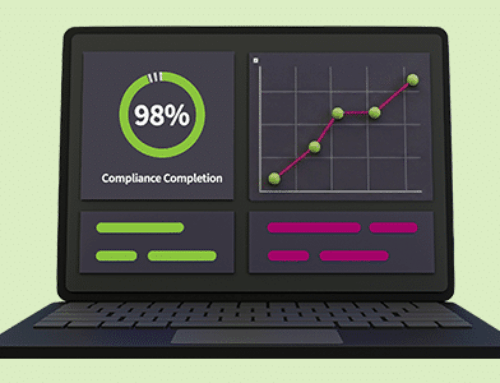
Compliance programs are often evaluated on completion rates. Ninety-eight percent of employees completed the annual Code of Conduct training. From a documentation and audit standpoint, that number matters. From a behavior change standpoint, it tells you almost nothing.
Completion rate measures whether an employee clicked through a course. It does not measure whether they understood the content, whether they can apply it to an ambiguous situation, or whether they will recognize a compliance risk when they encounter one six months from now.
Organizations that optimize for completion rates build programs that are easy to complete. That is not the same as building programs that are effective at reducing compliance risk.
The Policy Awareness Gap
Traditional Code of Conduct training is built around policy content. Here is the rule. Here is what it means. Here is the penalty for violating it. Confirm that you have read and understood it.
That structure creates policy awareness. It does not create the recognition skill that compliance decisions actually require.
Consider the difference:
Policy awareness: An employee knows that the company prohibits accepting gifts from vendors valued at or above a certain amount.
Recognition skill: An employee receives a gift from a vendor two weeks before the contract renewal, recognizes it as a situation that requires disclosure, and knows what to do next.
Policy-based training develops the first. Scenario-based training develops the second. Most compliance incidents are caused by failures of recognition, not failures of awareness. Employees don’t usually violate policy because they forgot the rule. They violate it because the situation in front of them didn’t trigger the recognition that the rule applied.
The Forgetting Curve Problem
Even well-designed training loses effectiveness over time. Research on the forgetting curve — first described by psychologist Hermann Ebbinghaus — suggests that without reinforcement, people forget up to 70% of new information within 24 hours and up to 90% within a week.
For compliance training, this creates a structural timing problem. Annual training typically happens in January. But compliance decisions happen in May, August, and November. By the time an employee faces a real conflict of interest situation or an ambiguous vendor gift, the training they completed months ago has substantially faded.
This is not a failure of employee attention or motivation. It is a predictable consequence of delivering training as a single annual event and then expecting it to influence behavior across the full year.
The Generic Content Problem
Off-the-shelf Code of Conduct training is built to serve the broadest possible audience. The scenarios are generic, the characters are interchangeable, and the situations are designed to be universally recognizable rather than specifically relevant.
The problem is that employees recognize generic training as generic. When the scenario doesn’t reflect their actual work environment — their specific role, the pressures they face, the relationships they navigate — it feels like an abstract exercise rather than practical preparation.
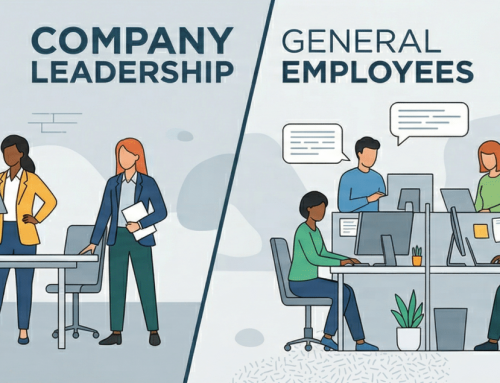
A procurement manager at a pharmaceutical company faces different compliance pressures than a sales representative at a financial services firm. A line manager in a manufacturing environment faces different risks than a software developer at a technology company. Training that treats these employees identically misses the specific recognition failures that create real compliance exposure
The Once-a-Year Structure Problem
Annual compliance training has a certain institutional logic. It produces a clear compliance record. It satisfies audit requirements. It creates a defined window for delivering new policy updates.
But compliance risk doesn’t follow an annual calendar. Vendor relationships, internal pressures, gray-area decisions, and reporting concerns happen continuously throughout the year. A training structure that consolidates all compliance education into a single annual event creates a long window — often 11 months — during which employees navigate real situations without recent reinforcement.
Organizations that have moved toward continuous reinforcement — deploying short, scenario-based reminders monthly or quarterly — consistently find that employees are better prepared to recognize compliance risks when they actually occur.
The Standard Worth Holding Code of Conduct Training To
A Code of Conduct training program that produces high completion rates but no measurable change in how employees make decisions has accomplished the easier of the two goals. Completion is necessary. It creates the documentation that audits and regulators require. But it is a floor, not a ceiling.
The higher standard — employees who recognize compliance risks when they encounter them in real situations — requires a different design approach. Scenario-based training that reflects real risk situations and is reinforced periodically throughout the year is tailored to the specific roles and pressures your employees face.
That is what the most effective compliance programs are built around. And it is the standard that Code of Conduct training is capable of meeting.
Compliance Scenarios Worth Exploring
Each scenario places employees inside a realistic workplace situation and asks them to make a decision.
Build a Scenario-based Compliance Training Program
Xcelus designs Scenario-based compliance training programs that combine annual foundational courses with scenario-based reinforcements deployed throughout the year. Each scenario is built around a realistic workplace decision your employees actually face.