
Why Employees Break Rules They Already Know at Work
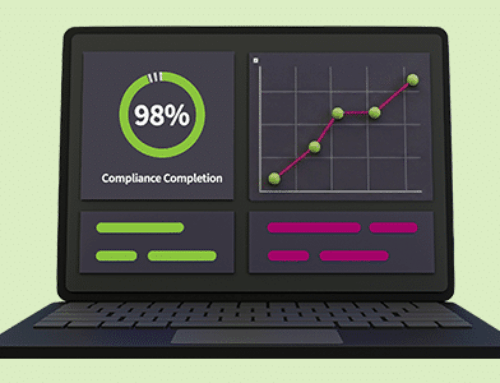
If compliance were simply a matter of “knowing the rules,” every company with a 98% completion rate would be 100% safe.
But we know that isn’t the case.
When a major compliance failure hits the headlines, the investigation rarely finds that the employee “didn’t know” the policy. More often, they knew the rule, they had passed the test, and they still made a high-risk decision.
The question isn’t what they knew—it’s why they didn’t apply it.
Many compliance leaders encounter a frustrating pattern: employees complete training, acknowledge company policies, and pass knowledge checks—yet months later, a situation arises where the rules are still bent or overlooked. In many cases, the issue is not a lack of knowledge but the challenge of recognizing when a routine business decision has compliance implications.
Common Reasons Employees Break Rules
Most employees do not set out to violate company policies. In many cases, rule-breaking occurs because the situation does not feel like a compliance issue in the moment. Several factors often contribute to these decisions:
Normalization
Employees may believe that bending a rule is acceptable because they see others doing the same thing.
Pressure
Deadlines, sales targets, or customer expectations can create pressure to prioritize business outcomes over strict adherence to policy.
Ambiguity
Real-world situations rarely look exactly like policy examples. Employees may struggle to determine how rules apply in complex or unfamiliar situations.
Understanding these dynamics helps explain why rule violations sometimes occur even when employees are aware of company policies.
1. The Power of Normalization
2. The “Dormant Knowledge” Problem
3. The Rationalization Trap
- “It’s for the good of the company.” (I’m hitting the target).
- “It’s just this one time.” (This is an exception, not a habit).
- “No one is getting hurt.” (It’s just a date on a document).
Common Reasons Employees Break Rules
Most employees do not set out to violate company policies. In many cases, rule-breaking occurs because the situation does not feel like a compliance issue in the moment. Several factors often contribute to these decisions:
Normalization
Employees may believe that bending a rule is acceptable because they see others doing the same thing.
Pressure
Deadlines, sales targets, or customer expectations can create pressure to prioritize business outcomes over strict adherence to policy.
Ambiguity
Real-world situations rarely look exactly like policy examples. Employees may struggle to determine how rules apply in complex or unfamiliar situations.
Understanding these dynamics helps explain why rule violations sometimes occur even when employees are aware of company policies.
Why This Matters for Compliance Training
Understanding why employees break rules is essential when designing effective compliance training. Most violations do not occur because employees intentionally ignore policies. More often, they occur because employees encounter situations that feel routine, ambiguous, or pressured.
When compliance expectations are presented only as written policies or one-time training events, employees may struggle to recognize how those rules apply in real situations.
This is why many organizations now use scenario-based compliance training, allowing employees to practice identifying risk situations before they occur in their daily work.
Why This Matters for Compliance Training
Understanding why employees break rules is essential when designing effective compliance training.
Most violations do not occur because employees intentionally ignore policies. More often, they occur because employees encounter situations that feel routine, ambiguous, or pressured.
When compliance expectations are presented only as written policies or one-time training events, employees may struggle to recognize how those rules apply in real situations.
This is why many organizations incorporate scenario-based compliance training, allowing employees to practice identifying potential compliance risks before they encounter them in their daily work.
How The Compliance Reinforcement Cycle™ Stops the Slide
- It keeps the policy active, not dormant.
- It challenges normalization by surfacing “gray-area” situations.
- It builds recognition, so the employee doesn’t just know the rule—they know when they are about to break it.