
What Four Senior Leaders Wish Every Employee Knew (And Why Training Rarely Tells Them)
Here’s a thought experiment I’ve been sitting with lately.
Ask a Chief Compliance Officer, an HR leader, a VP of Security Awareness, and a VP of AI Readiness the same question—what do you wish every employee actually knew?—and you’ll get four different lists. Different priorities, different language, different fears.
But if you read all four answers carefully, one thread runs through all of them.
It’s not policy knowledge. It’s not awareness. It’s not even values.
It’s decision-making—specifically, the ability to recognize a moment that matters, slow down, apply sound judgment, and act with confidence. What we at Xcelus call decision readiness.
And almost no traditional training builds it. Here’s why.
1. The Chief Compliance Officer
“The Core Truth: Rules won’t save you in the gray areas.”
Chief Compliance Officers will tell you that the employees who get the company into trouble are rarely the ones who didn’t know the rule. They’re the ones who encountered a situation the rule didn’t clearly cover—a vendor who’s also a friend, a manager pushing for approval on something that feels off, or a small expense that “everyone does”—and made a fast, unexamined call.
The honest CCO admission? Most compliance failures occur in the gray area. Training that only teaches rules prepares employees for a multiple-choice quiz at the end of a module; it doesn’t prepare them for real-world ambiguity.
- What actually helps: Repeated exposure to scenario-based practice where there is no obvious “right” answer.
- The Goal: Not rule recall, but judgment under pressure.
2. The HR Leader
“The Core Truth: Employees don’t fail because of bad intentions. They fail because they didn’t pause.”
HR sees the human side of compliance failures, and it’s rarely what people expect. It’s usually not a bad person doing a bad thing deliberately. It’s a good person in a hurry, under pressure from a manager they trust, in a culture where a certain behavior has been normalized long enough that nobody questions it anymore.
What HR wishes employees knew is this: your instincts are an asset, but only if you use them. The moment something feels slightly off—a request that’s unusual, a process being bypassed, or a justification that a little too convenient—is exactly the moment to slow down, not speed up.
- The Red Flag: Manufactured urgency is the most reliable signal that a decision deserves scrutiny, not speed.
- The Goal: Building the habit of pausing at the moment of friction to change behavior in a way that rules-and-awareness training simply cannot reach.
3. The Security VP
“The Core Truth: You are the target. Your judgment is the last line of defense.”
Modern security threats are not aimed at your firewall. They’re aimed at you—specifically, your tendency to be helpful, to trust a familiar name, and to act quickly when someone creates a sense of urgency.
The VP of Security Awareness will tell you that the most sophisticated phishing attacks today reference your real colleagues, your actual projects, and your company’s genuine vendors. AI has made social engineering dramatically more convincing. The old advice to “look for bad grammar” is no longer sufficient.
What actually protects employees isn’t a longer list of warning signs. It’s a trained reflex consisting of two habitual questions:
- “Did I initiate this request, or did it come to me out of nowhere?”
- “Does this action ask me to bypass a standard, secure process?”
These two questions, asked habitually, stop the majority of attacks. That is a decision-making skill, not a compliance checkbox.
4. The AI Readiness VP
“The Core Truth: The model has no accountability. You do.”
This is the newest voice in the room, and in some ways, the most urgent.
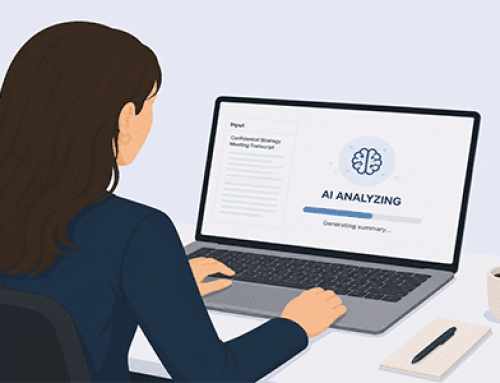
Employees are using AI tools every day—sanctioned and unsanctioned—to draft communications, analyze data, summarize documents, and generate work product. The speed gains are real, but so are the risks that most employees haven’t internalized yet.
The dangerous habit isn’t using AI; it’s delegating judgment to AI while maintaining the appearance of doing the work yourself. Sending an AI-generated email without reading it closely or submitting a data analysis without validating the numbers is a recipe for disaster.
- The Reality: The model produces wrong answers with the same confident tone as correct ones. It has zero professional accountability for the output. You do.
- The Goal: Learning the distinction between amplifying your judgment with AI and replacing your judgment with AI.
The Common Thread
Four different functions. Four different areas of risk. One consistent finding.
The employees who handle difficult situations well—who catch the phishing email, push back on the questionable manager request, or use AI as an assistant rather than a substitute for thinking—aren’t the ones who sat through the most training hours.
They’re the ones whose training built a decision-making reflex.
They pause at friction. They recognize manufactured urgency. They know their judgment is the final check before a decision becomes an action. They’ve practiced enough realistic scenarios that when the real moment comes, it doesn’t feel unfamiliar.
That’s not awareness. That’s readiness.
What This Means for Your Training Program
If your current compliance, security, or AI training is built primarily around policies, rules, and awareness content, you have a gap. Not because the content is wrong, but because content alone doesn’t change behavior at the moment it matters most.
Decision readiness is built through deliberate practice: realistic scenarios, competing pressures, decisions without obvious answers, and reflection on why the right call is harder than it looks.
At Xcelus, we don’t build modules to help employees memorize the rulebook. We build immersive, scenario-based experiences that train the reflex to pause, evaluate, and execute. We don’t just build awareness—we build decision readiness.
If the four leaders above are right—and in our experience, they are—it’s exactly what your employees actually need.
© 2005–2026 Xcelus LLC. All rights reserved. This content is for training and discussion only and is not legal advice; consult qualified counsel about your organization’s specific obligations.